
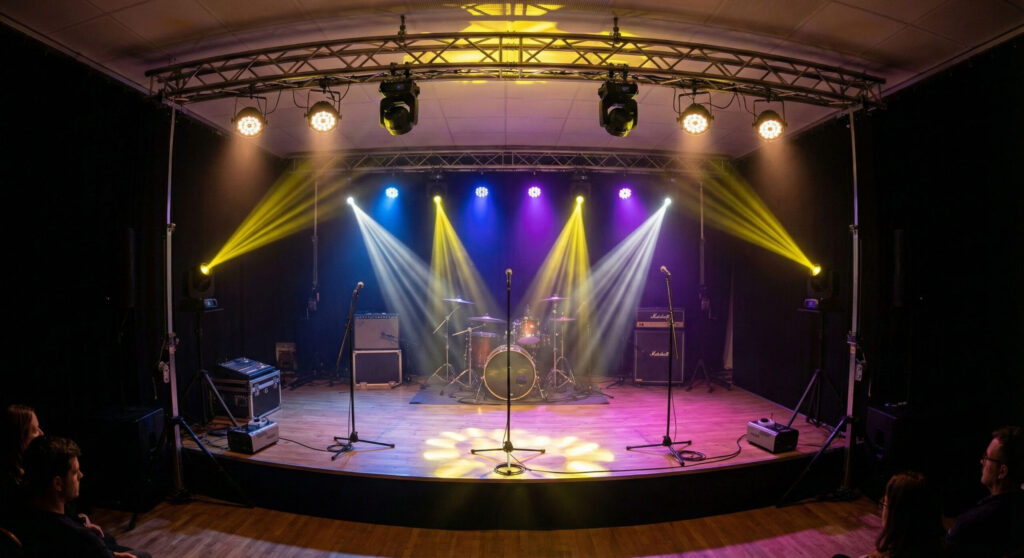
Stage Lighting Design Guide: Types, Equipment, Uses & Professional Techniques
Stage lighting design is a critical element in live performances, theater productions, concerts, and events. It combines technical lighting systems with artistic design principles to create atmosphere, enhance storytelling, and guide audience attention.
This complete guide explains what stage lighting is, how it works, where it is used, types of stage lighting equipment, and professional design considerations for effective lighting setups.
What is Stage Lighting? (Definition & Purpose)
Stage lighting is the strategic use of lighting systems to illuminate performers, scenery, and stage environments during live events.
Unlike basic illumination, stage lighting is designed to:
- Enhance visibility of performers and stage elements
- Create emotional atmosphere and mood
- Support storytelling and dramatic structure
- Direct audience focus to key moments
- Improve visual aesthetics of a performance
Modern lighting systems integrate LED stage lights, moving head fixtures, spotlights, and digital control systems such as DMX lighting protocols to achieve dynamic and precise effects.
Where is Stage Lighting Used?
Stage lighting is essential in many live production environments, including:
- Theater and drama performances
- Concerts and live music events
- Music festivals and stage shows
- Corporate events and presentations
- Television productions and broadcasting
- Cultural ceremonies and artistic performances
Each environment requires a different lighting approach depending on scale, audience type, and emotional tone.
Types of Stage Lighting Equipment
Understanding lighting fixtures is essential for professional stage lighting design.
- General (Flood) Lighting
General lighting provides uniform illumination across the stage. LED PAR lights are commonly used to ensure performers are clearly visible without harsh shadows.
- Moving Head Lights
Moving head fixtures are dynamic lighting systems widely used in concerts and festivals. They can rotate, change colors, and create motion effects synchronized with music or performance timing.
- Spotlights and Profile Lights
These focused lighting instruments are used in theater and stage productions to highlight specific performers or objects, ensuring audience attention is directed correctly.
- Ambient & Effect Lighting
Effect lighting creates atmosphere using color transitions, haze interaction, and intensity changes. It is commonly used to enhance emotional impact in scenes.
Important Considerations in Stage Lighting Design
Professional stage lighting design requires careful planning and technical precision.
Lighting Position and Focus
Correct positioning ensures performers are clearly visible and prevents unwanted shadows or glare. Lighting angles must be adjusted based on stage layout.
Color Temperature and Mood Design
Color plays a major role in emotional storytelling:
- Warm colors (red, orange, yellow) → intimacy, energy, passion
- Cool colors (blue, green) → tension, distance, calmness
Light Intensity and Balance
Proper brightness levels ensure visual comfort and prevent overexposure. Balanced lighting helps maintain audience focus throughout the performance.
Event Type and Lighting Style
Different events require different lighting strategies:
- Concert lighting → dynamic, high-energy, fast transitions
- Theater lighting → controlled, focused, narrative-driven
- Corporate lighting → clean, professional, neutral tone
DMX Lighting Control Systems
Modern stage lighting is controlled via DMX protocol systems, allowing technicians to adjust:
- Light intensity
- Color changes
- Movement of fixtures
- Timing and synchronization
This enables fully automated and programmable lighting design.
Benefits of Professional Stage Lighting
High-quality stage lighting provides multiple advantages:
- Enhances storytelling and emotional depth
- Improves audience engagement and focus
- Creates professional and immersive stage visuals
- Supports performers with clear visibility
- Elevates overall production value
Stage Lighting and Event Experience
Stage lighting is not just a technical requirement—it is a core part of audience experience design. When properly executed, lighting transforms a simple performance into a fully immersive visual and emotional experience.
Conclusion
Stage lighting design is a combination of technical engineering and artistic creativity. By using the right lighting equipment, control systems, and design principles, professionals can significantly enhance the quality of live performances across theater, concerts, and events.
Frequently Asked Questions (FAQ)
What is stage lighting in simple terms?
Stage lighting is the use of lighting systems to illuminate performers and create mood, visibility, and atmosphere in live performances.
What are the main types of stage lighting?
The main types include general lighting, moving head lights, spotlights, profile lights, and effect lighting.
What is DMX in stage lighting?
DMX is a digital control protocol used to manage lighting systems, including brightness, color, and movement from a central controller.
Why is stage lighting important in performances?
It helps guide audience attention, enhances storytelling, improves visibility, and creates emotional impact.